Starting a beehive can feel overwhelming for beginners. Between colony establishment, queen acceptance, and winter survival rates, the learning curve is steep. But research shows nucleus colonies (nucs) offer a dramatically easier path—with first-year success rates nearly double those of traditional package bees. Here’s how nucs solve the top challenges new beekeepers face and a step-by-step system to leverage their advantages.
Why Nucs Are the Ultimate Beginner Shortcut
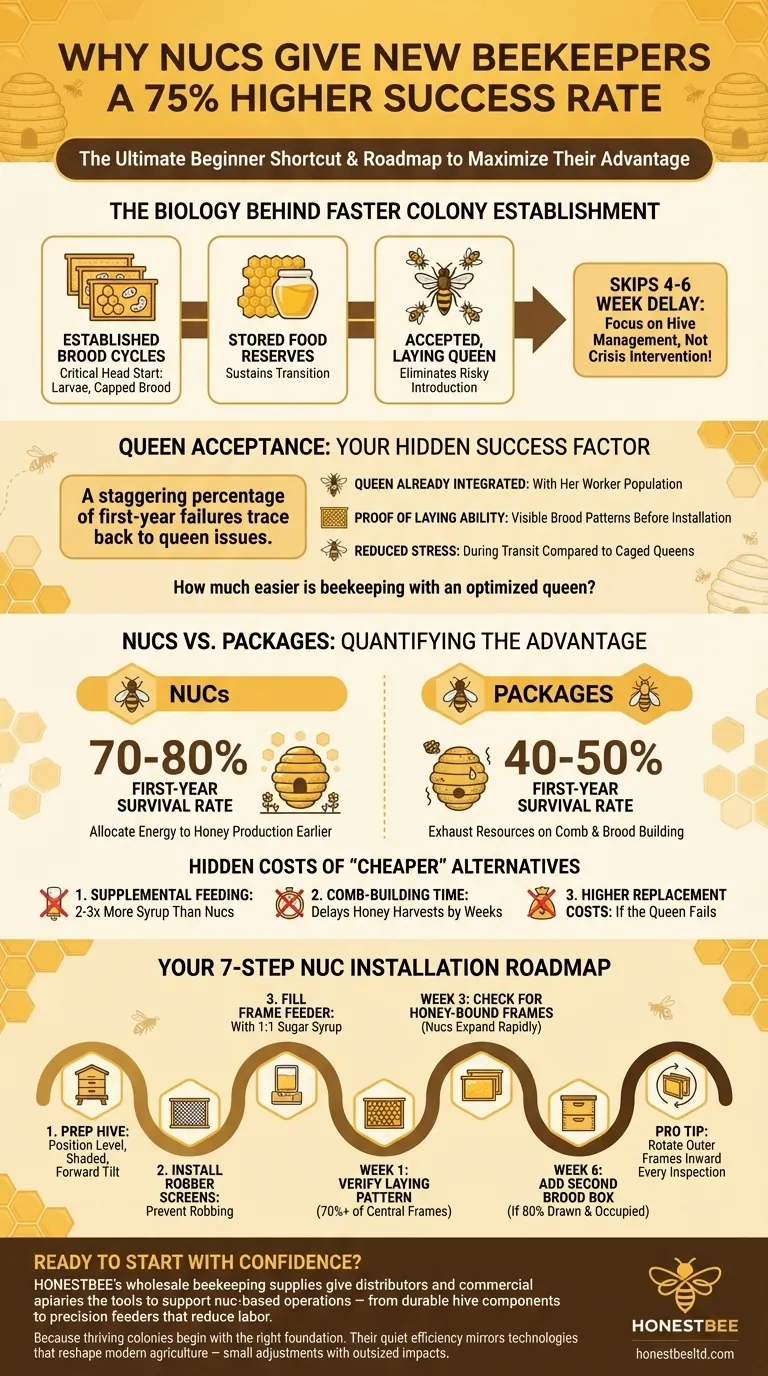
The Biology Behind Faster Colony Establishment
Nucs arrive as mini-colonies with a critical head start:
- Established brood cycles, including larvae and capped brood (typically 3–5 frames)
- Stored food reserves (pollen and honey) to sustain the colony during transition
- An accepted, laying queen—eliminating the risky introduction phase
This means your hive skips the 4–6 week delay package bees face while workers feed the queen, build comb, and raise the first brood. Nucs hit the ground running, allowing beginners to focus on hive management instead of crisis intervention.
Queen Acceptance: Your Hidden Success Factor
A staggering percentage of first-year colony failures trace back to queen issues—either rejection by workers or failure to mate properly. Nucs solve this by providing:
- A queen already integrated with her worker population
- Proof of laying ability (visible brood patterns) before you install the hive
- Reduced stress during transit compared to caged queens in packages
Have you considered how much easier beekeeping becomes when the queen variable is already optimized?
Nucs vs. Packages: Quantifying the Advantage
First-Year Survival Rate Comparisons
While exact numbers vary by climate and management, studies consistently show:
- Nucs achieve winter survival rates around 70–80%
- Packages average just 40–50% under similar conditions
The difference? Nucs allocate energy to honey production earlier, while package bees exhaust resources playing catch-up on comb construction and brood rearing.
Hidden Costs of "Cheaper" Alternatives
That $30–50 savings on a package often disappears when you account for:
- Supplemental feeding (2–3x more syrup than nucs require)
- Comb-building time delays honey harvests by weeks
- Higher replacement costs if the queen fails
For beginners, these hidden demands often lead to discouragement or costly mistakes.
Your 7-Step Nuc Installation Roadmap
Pre-Installation Hive Prep Checklist
- Position the hive on a level, shaded base with a slight forward tilt
- Install robber screens if other colonies are nearby
- Fill a frame feeder with 1:1 sugar syrup (even nucs benefit from early support)
Week-by-Week Brood Pattern Monitoring
- Week 1: Verify the queen’s laying pattern (should cover 70%+ of central frames)
- Week 3: Check for honey-bound frames—a common issue as nucs expand rapidly
- Week 6: Add a second brood box if 80% of frames are drawn and occupied
Pro Tip: Rotate outer frames inward every inspection to encourage even comb development.
Ready to start with confidence? HONESTBEE’s wholesale beekeeping supplies give distributors and commercial apiaries the tools to support nuc-based operations—from durable hive components to precision feeders that reduce labor. Because thriving colonies begin with the right foundation.
Notice how nucs transform beekeeping from a gamble into a predictable science? Their quiet efficiency mirrors technologies that reshape modern agriculture—small adjustments with outsized impacts.
Guía Visual
Productos relacionados
- Colmenas de Abejas de Espuma de Poliestireno Mini Caja de Nuc de Apareamiento con Marcos Alimentador Colmenas de Abejas de Espuma de Poliestireno Caja de Nuc de 3 Marcos
- Cajas de plástico corrugado Langstroth Poly Nuc de 5 marcos
- Caja de cría Pro de 6 marcos para el apareamiento de las abejas melíferas
- Caja apícola de madera de 5 bastidores
- Caja de plástico de 4 marcos para la cría de abejas
Artículos relacionados
- Arquitectura de la Realeza: La Caja de Núcleo como Crisol de una Reina
- La termodinámica de una nueva colonia: Por qué una caja de nuc más pequeña es un comienzo más fuerte
- Cómo los marcos más pequeños mejoran la salud de las crías mediante la regulación térmica
- La Caja de Nuc No Es un Hogar, Es una Herramienta: Una Guía Estratégica para la Gestión de Flotas de Apiarios
- Diseño para el Instinto: Por Qué la Caja Nuc es la Trampa de Enjambres Perfecta