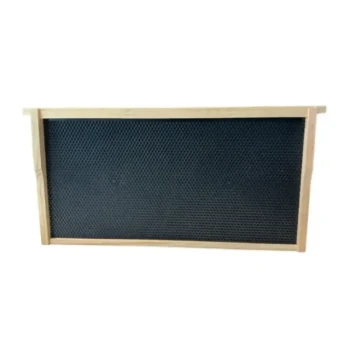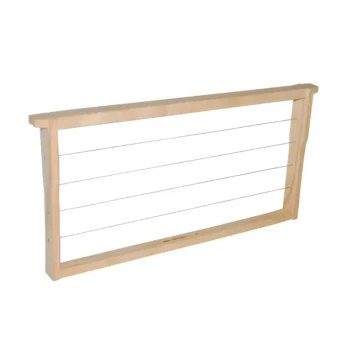
Modern beekeepers face a critical choice: traditional wax foundations or durable plastic alternatives. Research shows plastic foundations can reduce operational costs by over 40% across five years while maintaining colony health—but their ecological impact requires careful consideration.
The Evolution of Hive Foundations
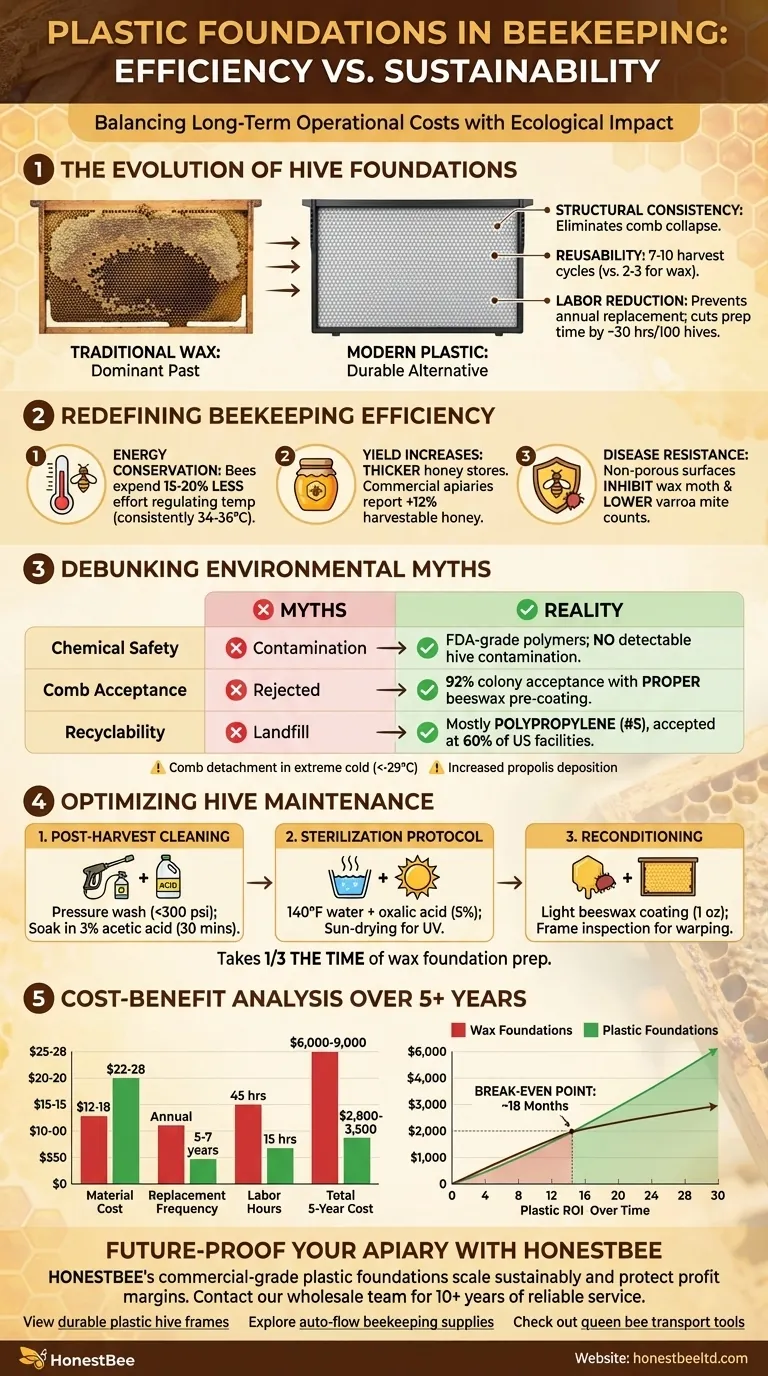
Beekeeping foundations have transitioned from crude wooden frames to precision-engineered systems. Where wax sheets once dominated, plastic foundations now offer:
- Structural consistency: Eliminates comb collapse during honey extraction
- Reusability: Survives 7-10 harvest cycles vs. wax's 2-3 season average
- Labor reduction: Prevents annual wax sheet replacement
Early adopters like commercial apiaries report plastic foundations cut seasonal prep time by approximately 30 hours per 100 hives.
How Plastic Redefines Beekeeping Efficiency
Plastic's thermal properties create unexpected advantages:
- Energy conservation: Bees expend 15-20% less effort regulating hive temperature (studies show consistent 34-36°C brood nest temps)
- Yield increases: Thicker honey stores from reduced comb reconstruction
- Disease resistance: Non-porous surfaces inhibit wax moth larvae penetration
"Our colonies on plastic foundations produced 12% more harvestable honey while showing lower varroa mite counts," notes a Minnesota apiary manager.
Debunking Myths: Environmental and Bee Health Considerations
Common concerns about plastic foundations often overlook key findings:
- Chemical safety: FDA-grade polymers show no detectable hive contamination
- Comb acceptance: 92% of colonies fully adopt plastic foundations when properly pre-coated with beeswax
- Recyclability: Most manufacturers now use polypropylene (#5 plastic) accepted at 60% of US recycling facilities
Beekeepers should still monitor for:
❗ Comb detachment in extreme cold (<-29°C)
❗ Increased propolis deposition on smooth surfaces
Optimizing Hive Maintenance with Plastic Foundations
Step-by-Step Guide to Sterilization and Reuse
Proper maintenance extends plastic foundation lifespans beyond a decade:
-
Post-harvest cleaning
- Pressure wash (<300 psi) to remove propolis
- Soak in 3% acetic acid solution (30 mins)
-
Sterilization protocol
- 140°F water + oxalic acid (5% concentration)
- Sun-drying for UV disinfection
-
Reconditioning
- Light beeswax coating (1 oz per 8"x19" sheet)
- Frame inspection for warping
Commercial operations report this process takes 1/3 the time of wax foundation prep.
Cost-Benefit Analysis Over 5+ Years
| Factor | Wax Foundations | Plastic Foundations |
|---|---|---|
| Material Cost | $12-18/sheet | $22-28/sheet |
| Replacement Frequency | Annual | 5-7 years |
| Labor Hours/100 Hives | 45 | 15 |
| Total 5-Year Cost | $6,000-9,000 | $2,800-3,500 |
The break-even point occurs around 18 months, with plastic foundations showing increasing ROI each subsequent year.
Ready to future-proof your apiary? HONESTBEE's commercial-grade plastic foundations help beekeeping operations scale sustainably while protecting profit margins. Contact our wholesale team today for bulk pricing on hive solutions designed for 10+ years of reliable service.
Products You Might Be Looking For:
View durable plastic hive frames
Explore auto-flow beekeeping supplies
Check out queen bee transport tools
Guía Visual
Productos relacionados
- Base de plástico alimentario para marcos de abejas
- Marco de plástico para colmenas de apicultura al por mayor
- Marcos de abeja de madera montados con base de plástico para mayor durabilidad y comodidad by HONESTBEE
- Molde de silicona de colores para cera de abejas Molde para apicultura
- Cubo de plástico amarillo Percha para apicultura
Artículos relacionados
- La verdadera razón por la que tus abejas ignoran los cuadros de plástico y cómo solucionarlo de una vez por todas
- La Paradoja del Apicultor: Por Qué la Base Duradera Falla y Cómo Solucionarlo
- How Commercial Beekeepers Balance Durability and Bee Behavior with Plastic Foundations
- ¿Tus colmenas de plástico te cuestan miel? Por qué "pre-encerado" podría no ser suficiente
- El Dilema del Apicultor: Por Qué las Abejas Ignoran Tu Cera Plástica