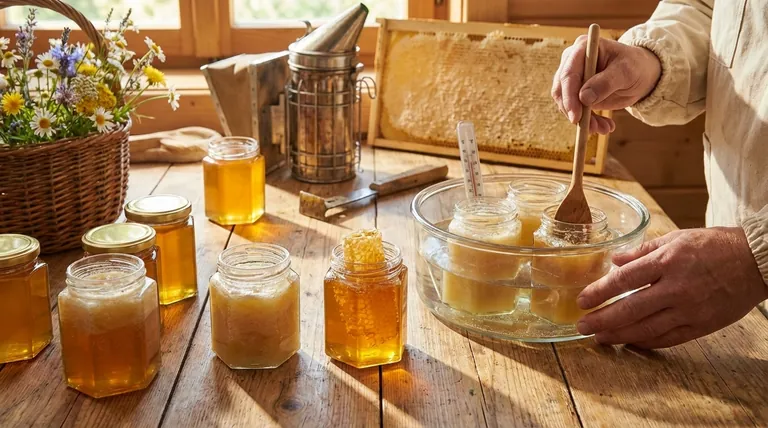
Honey crystallization is a natural process that often raises concerns about quality and usability. Contrary to popular belief, crystallized honey isn’t spoiled—it’s simply undergoing a natural transformation. This guide explores the science behind crystallization, debunks common myths, and provides practical solutions for beekeepers and honey enthusiasts to maintain optimal texture while preserving nutritional integrity.
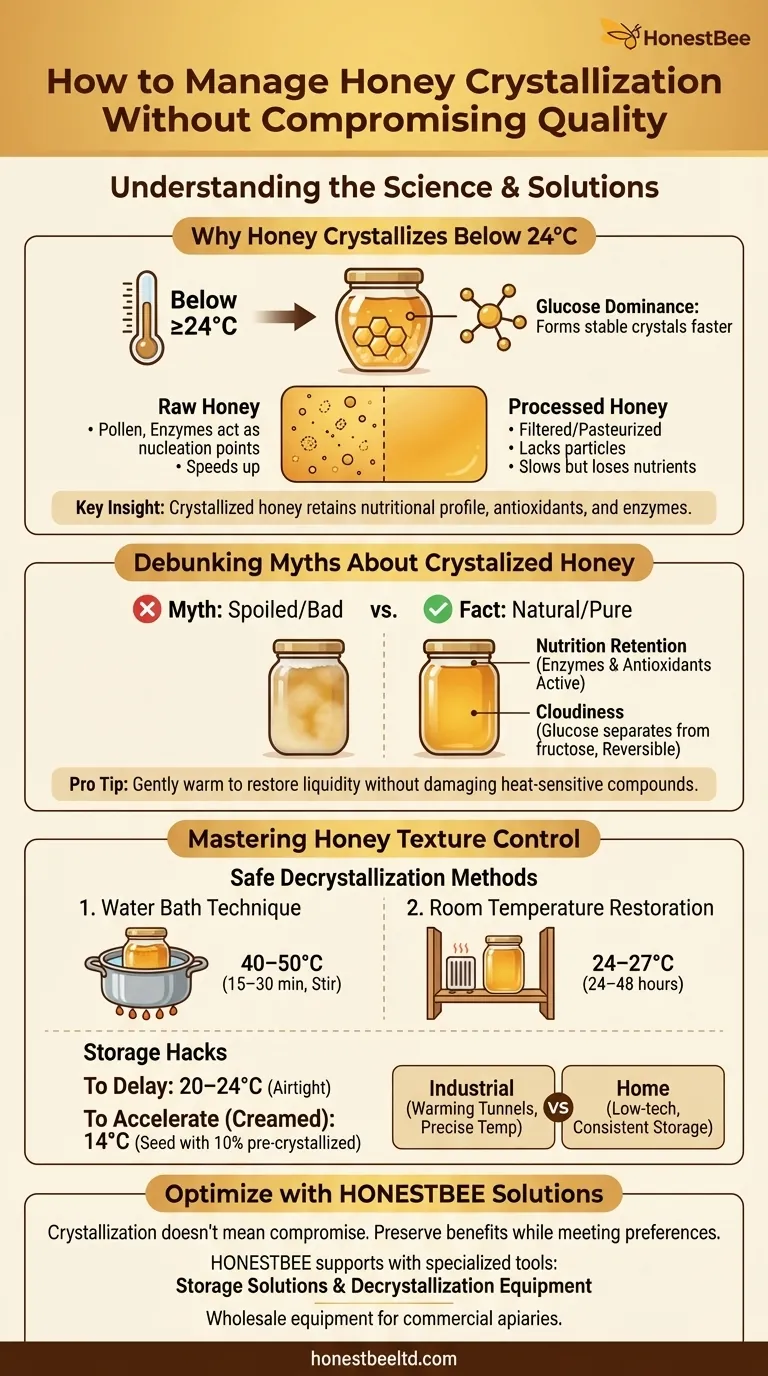
Why Honey Crystallizes Below 24°C
Honey solidifies at cooler temperatures due to its chemical composition. Understanding this process helps manage texture without resorting to harmful heating methods.
The Role of Glucose and Temperature
- Glucose Dominance: Honey high in glucose (e.g., clover or sunflower honey) crystallizes faster because glucose molecules form stable crystals.
- Temperature Threshold: Below 24°C, glucose bonds tighten, accelerating crystallization. Warmer storage (above 24°C) delays the process but risks overheating and enzyme degradation.
Raw vs. Processed: How Honey Types React Differently
- Raw Honey: Contains pollen and natural enzymes that act as nucleation points, speeding up crystallization.
- Processed Honey: Filtered and pasteurized honey lacks these particles, slowing crystallization but often at the cost of nutritional value.
Key Insight: Research confirms crystallized honey retains the same nutritional profile as liquid honey, including antioxidants and enzymes.
Debunking Myths About Crystalized Honey
Misconceptions about crystallized honey lead to unnecessary waste. Let’s clarify the facts.
Nutrition Retention in Solid vs. Liquid States
- Enzymes like diastase and invertase remain active in crystallized honey.
- Antioxidant levels are unaffected by texture changes.
Why Cloudy Honey Isn’t Spoiled
Crystallization is a sign of purity, especially in raw honey. Cloudiness occurs when glucose separates from fructose—a natural, reversible process.
Pro Tip: Gently warm crystallized honey to restore liquidity without damaging heat-sensitive compounds.
Mastering Honey Texture Control
Whether you’re a beekeeper or distributor, these methods ensure honey meets quality standards.
Safe Decrystallization Methods
-
Water Bath Technique:
- Submerge sealed honey jars in warm water (40–50°C) for 15–30 minutes, stirring occasionally. Avoid direct heat to prevent HMF (hydroxymethylfurfural) formation.
-
Room Temperature Restoration:
- Store crystallized honey at 24–27°C for 24–48 hours to gradually liquefy it.
Storage Hacks to Delay or Accelerate Crystallization
- To Delay: Store at 20–24°C in airtight containers.
- To Accelerate (e.g., for creamed honey): Seed liquid honey with 10% pre-crystallized honey and store at 14°C.
Industrial Techniques vs. Home Practices
- Commercial Solutions: Large-scale producers use controlled warming tunnels with precise temperature monitoring.
- Home Beekeepers: Focus on low-tech methods like consistent storage temperatures and minimal processing.
For Beekeeping Pros: HONESTBEE’s wholesale equipment, including temperature-controlled storage units, helps commercial apiaries maintain honey quality during bulk handling.
Ready to Optimize Your Honey’s Shelf Life?
Crystallization doesn’t mean compromise. With the right techniques, you can preserve honey’s natural benefits while meeting texture preferences. HONESTBEE supports beekeepers and distributors with specialized tools—from storage solutions to decrystallization equipment—ensuring your honey stays market-ready.
Explore our wholesale catalog to streamline your honey management process today.
Guía Visual
Productos relacionados
- Tanque de descristalización de la máquina de procesamiento de miel de acero inoxidable de alta resistencia
- Fundidor de miel cónico termostático profesional
- Deshumidificador y Secador de Miel de 0.5T con Calentamiento al Vacío y Máquina de Filtración Engrosada
- Cinta calefactora de caucho siliconado para tambores de miel
- Equipo eléctrico del purificador de la máquina de filtrado de miel de doble pared para la planta de procesamiento de miel
Artículos relacionados
- Más allá del brillo: la física oculta del saneamiento de los tanques de miel
- ¿Su tanque de miel está reteniendo a su negocio? Cómo elegir un tamaño que impulse el crecimiento, no la frustración
- ¿Es su tanque de miel un peligro oculto? Por qué la mala sanidad puede arruinar su cosecha
- Calor, Miel y el Compromiso Comercial: Por Qué el Procesamiento es un Acto de Equilibrio
- Cómo los tanques de calentamiento de miel preservan la calidad y la eficiencia en la apicultura moderna