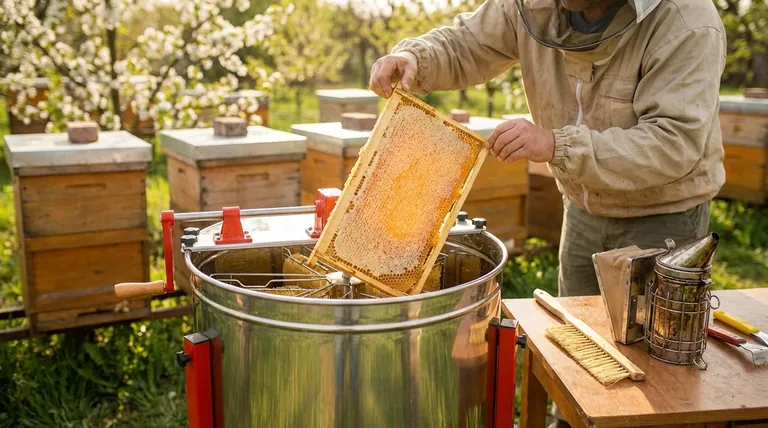
Los apicultores se enfrentan a un delicado equilibrio: extraer el néctar dorado de la naturaleza mientras salvaguardan la salud de sus colonias. La cosecha ética de miel no se trata solo del rendimiento, sino de preservar la integridad del panal, minimizar el estrés de las abejas y garantizar la productividad de la colmena a largo plazo. Esta guía revela métodos probados para cosechar miel madura de manera eficiente sin comprometer el bienestar de sus abejas.
Cosecha ética de miel
Determinación de la madurez del panal: desde pistas visuales hasta pruebas científicas
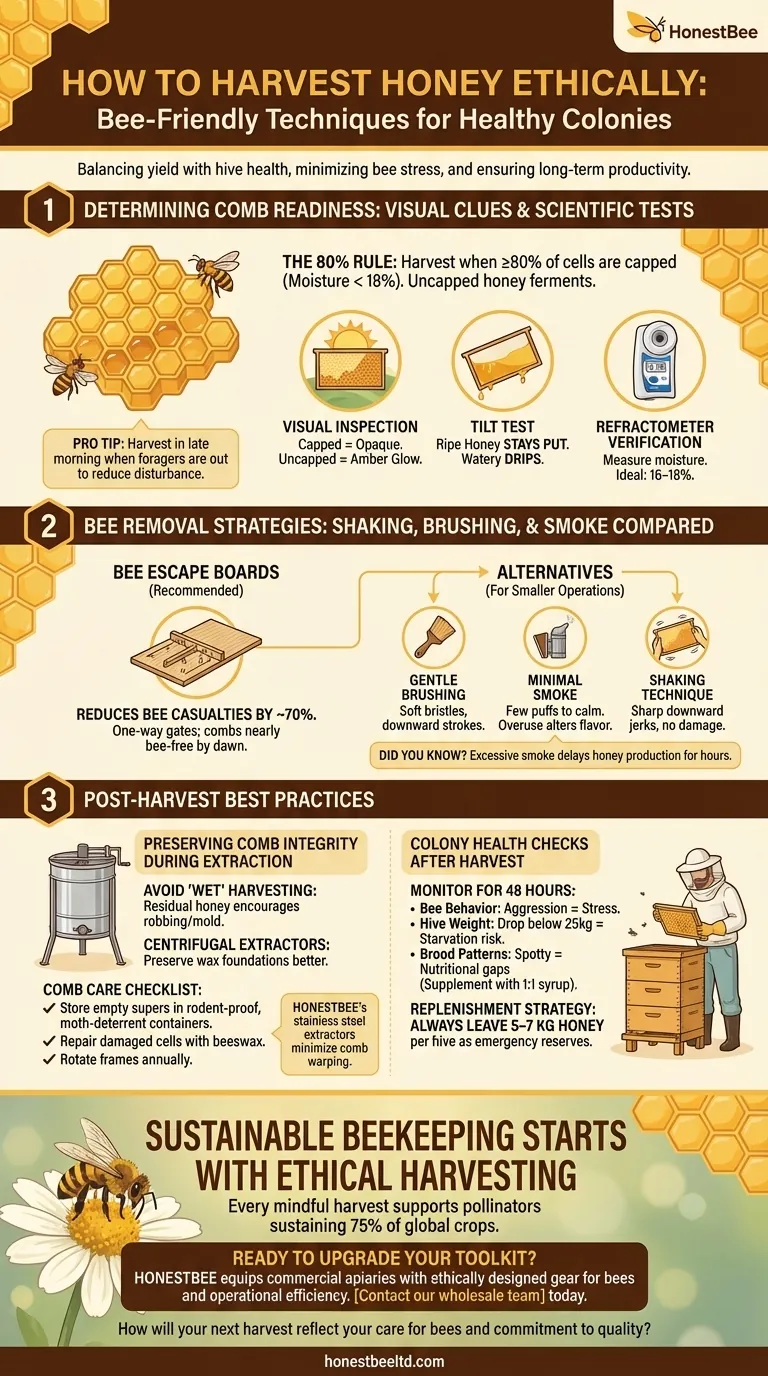
Comience con la regla del 80%: Los panales están listos para la cosecha cuando al menos el 80% de las celdas están operculadas (selladas con cera), una señal de que las abejas han reducido el contenido de humedad a menos del 18%. La miel sin sellar fermenta, arruinando su lote.
Tres comprobaciones de madurez:
- Inspección visual: Sostenga los cuadros frente a la luz solar. Las celdas selladas parecen opacas; las que no están selladas brillan con un tono ámbar.
- Prueba de inclinación: Incline suavemente el cuadro. La miel madura se mantiene en su lugar; la miel acuosa gotea.
- Verificación con refractómetro: Para mayor precisión, mida el contenido de humedad (ideal: 16–18%).
Consejo profesional: Coseche a media mañana cuando la mayoría de las abejas pecoreadoras estén fuera, reduciendo la perturbación de la colmena.
Estrategias de retirada de abejas: comparación entre sacudido, cepillado y humo
Las tablas de escape para abejas superan a los métodos manuales al reducir las bajas de abejas en aproximadamente un 70%. Estas puertas de un solo sentido permiten que las obreras salgan de las alzas melarias durante la noche pero bloquean su reingreso, dejando los panales casi libres de abejas al amanecer.
Alternativas para operaciones más pequeñas:
- Cepillado suave: Use cepillos de cerdas suaves con movimientos hacia abajo para evitar lastimar a las abejas.
- Humo mínimo: Unas pocas bocanadas calman a las abejas, pero el uso excesivo altera el sabor de la miel.
- Técnica de sacudido: Los movimientos secos hacia abajo desalojan a los grupos de abejas sin dañar el panal.
¿Sabía que...? Las investigaciones demuestran que las abejas expuestas a un exceso de humo tardan horas en retomar su actividad normal, lo que retrasa la producción de miel.
Mejores prácticas posteriores a la cosecha
Preservación de la integridad del panal durante la extracción
Evite la cosecha "húmeda": Dejar restos de miel en los panales fomenta el pillaje y el moho. Los extractores centrífugos preservan mejor los cimientos de cera que los métodos de prensado y filtrado.
Lista de control para el cuidado de los panales:
✔ Almacene las alzas vacías en contenedores a prueba de roedores con repelentes de polillas.
✔ Repare las celdas dañadas con láminas de cera de abeja para ahorrar a las abejas el esfuerzo de reconstrucción.
✔ Rote los cuadros anualmente para evitar la acumulación de cristalización.
Para apicultores: Los extractores de acero inoxidable de HONESTBEE minimizan la deformación de los panales, un problema común con las alternativas de plástico.
Controles de salud de la colonia después de la cosecha
Monitoree estas señales durante las 48 horas posteriores a la cosecha:
- Comportamiento de las abejas: La agresividad puede indicar pillaje o estrés en la reina.
- Peso de la colmena: Una caída repentina por debajo de los 25 kg conlleva riesgo de inanición invernal.
- Patrones de cría: Una cría irregular sugiere deficiencias nutricionales; suplemente con jarabe de azúcar 1:1 si es necesario.
Estrategia de reabastecimiento: Deje siempre de 5 a 7 kg de miel por colmena como reserva de emergencia.
La apicultura sostenible comienza con una cosecha ética
Dominar estas técnicas garantiza que sus colmenas prosperen a lo largo de las estaciones mientras producen miel de primera calidad. Cada cosecha consciente apoya a los polinizadores que sustentan el 75% de los cultivos mundiales.
¿Listo para actualizar su kit de herramientas apícolas? HONESTBEE equipa a los apiarios comerciales con equipos de cosecha diseñados éticamente, desde tablas de escape hasta soluciones de almacenamiento higiénico, ayudándole a proteger a las abejas mientras aumenta la eficiencia operativa. Contacte a nuestro equipo de ventas al por mayor hoy mismo para conocer precios por volumen en equipos respetuosos con las abejas.
Reflexión final: ¿Cómo podría su próxima cosecha reflejar tanto su cuidado por las abejas como su compromiso con la calidad?
Guía Visual
Productos relacionados
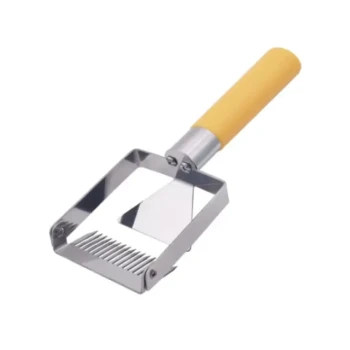
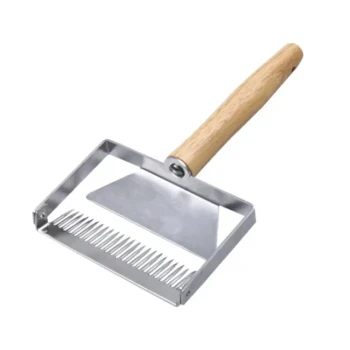
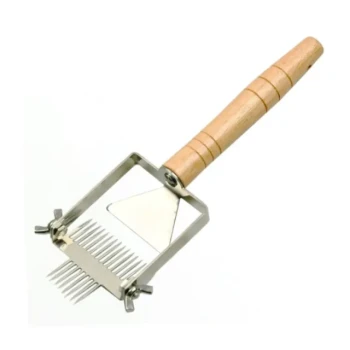
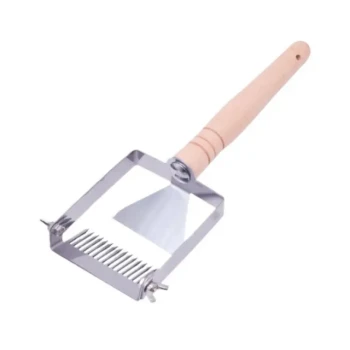
- Tenedor pivotante de acero inoxidable para desopercular miel en apicultura
- Tenedor pivotante de acero inoxidable para destapar miel con mango de plástico
- HONESTBEE Extractor de Miel Acrílico Manual de 2 Bastidores Equipo Apícola
- Extractor eléctrico de miel de 8 cuadros para apicultura
- Herramienta profesional para colmenas con palanca de acero inoxidable
Artículos relacionados
- El Cuello de Botella del Apicultor: Por Qué Su Herramienta de Desoperculación Define Su Cosecha
- El Tenedor Desoperculador: Precisión Sobre Velocidad en la Extracción de Miel
- Cómo protegen los panales y reducen los costes apícolas las horquillas desoperculadoras
- Por qué su cuchillo deshollinador le está costando dinero y cómo una simple horquilla lo soluciona
- Precisión Sobre Velocidad: La Lógica Económica del Desoperculador Manual