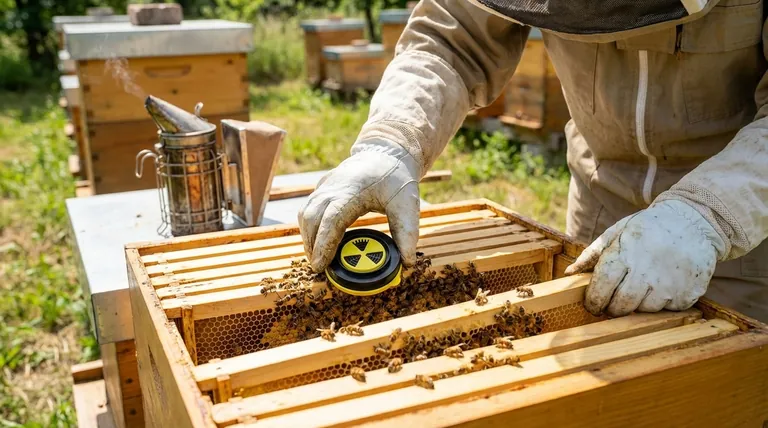
Varroa mites remain the single greatest threat to honeybee colonies worldwide, capable of collapsing entire apiaries within seasons if left unchecked. Modern beekeeping demands integrated pest management (IPM) strategies that combine chemical and non-chemical treatments while preventing resistance development. This guide synthesizes field-tested protocols from leading apicultural research to help commercial beekeepers establish resilient, adaptive defense systems.
The Varroa Crisis Imperative
Biological Impacts of Uncontrolled Infestations
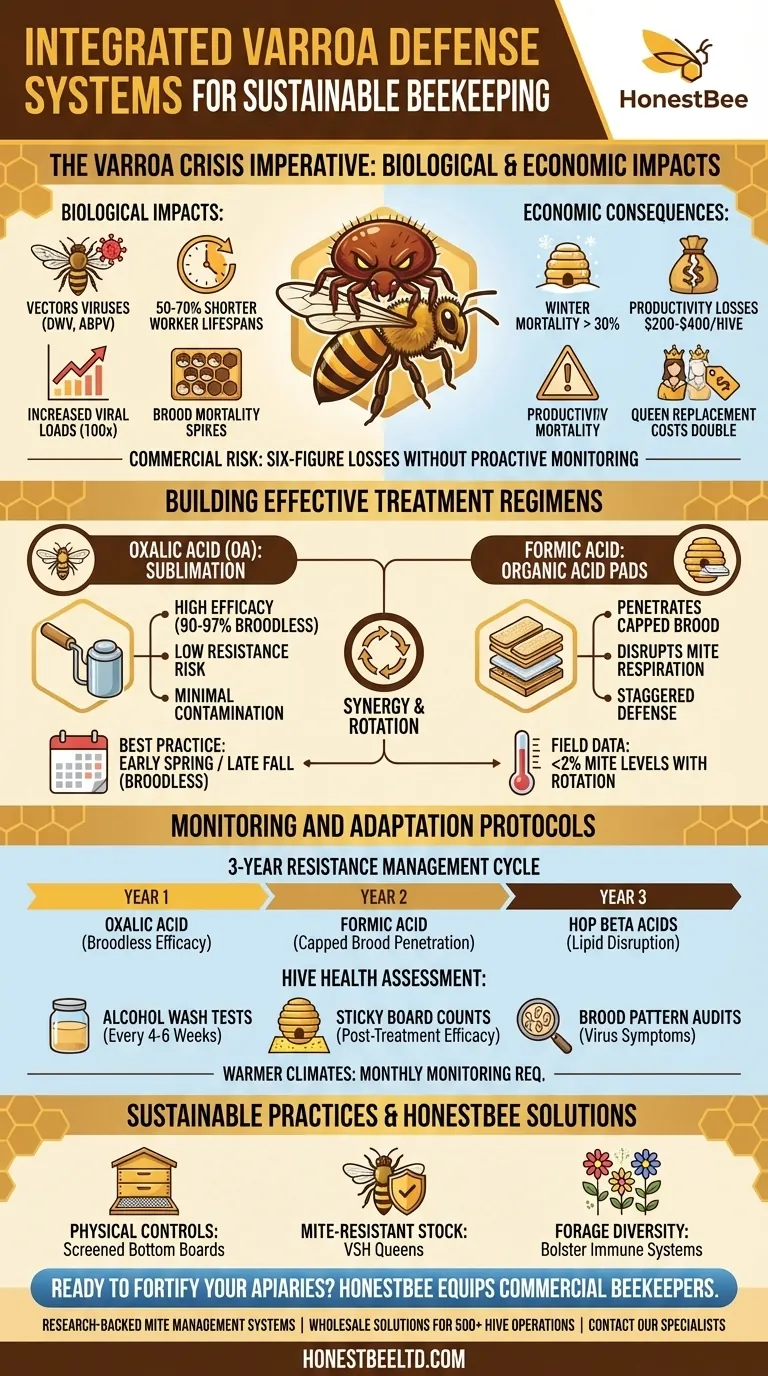
Varroa destructor doesn’t just feed on bee hemolymph—it vectors debilitating viruses like deformed wing virus (DWV) and acute bee paralysis virus (ABPV). Research shows mite-infested colonies experience:
- 50-70% shorter lifespans in worker bees
- Increased viral loads by 100-fold compared to mite-free hives
- Brood mortality spikes from secondary infections
Left untreated, these factors create a feedback loop where weakened bees become less effective at grooming off mites, accelerating colony collapse.
Economic Consequences for Beekeeping Operations
The 3% infestation threshold isn’t arbitrary—beyond this point, studies document:
- Winter mortality rates exceeding 30% in temperate climates
- Productivity losses of $200-$400 per hive annually from reduced honey yields and pollination contracts
- Queen replacement costs doubling due to mite-induced supersedure
Commercial operators managing 500+ hives face six-figure risks without proactive monitoring.
Building Effective Treatment Regimens
Oxalic Acid’s Role in Seasonal Management
Oxalic acid (OA) remains a cornerstone treatment due to its:
- High efficacy rates (90-97%) when applied via sublimation during broodless periods
- Low resistance risk, as mites cannot develop immunity to desiccation mechanisms
- Minimal hive contamination compared to synthetic miticides
Best Practice: Time OA applications for early spring/late fall when brood cycles pause in temperate regions.
Synergistic Combinations with Organic Acids
Formic acid complements OA by:
- Penetrating capped brood cells where mites reproduce
- Disrupting mite respiration through vapor action
- Providing staggered defense when rotated with OA treatments
Field Data: Apiaries alternating OA (winter) and formic acid (summer) sustain <2% mite levels year-round.
Monitoring and Adaptation
Resistance Management Through Treatment Rotation
A 3-year rotation cycle prevents adaptive pressure:
| Year | Treatment Phase | Key Advantage |
|---|---|---|
| 1 | Oxalic acid sublimation | Broodless period efficacy |
| 2 | Formic acid pads | Brood cell penetration |
| 3 | Hop beta acids | Lipid membrane disruption |
Hive Health Assessment Protocols
- Alcohol wash tests every 4-6 weeks during active seasons
- Sticky board counts to track treatment efficacy post-application
- Brood pattern audits for virus symptoms
Critical Note: Warmer climates require monthly monitoring due to year-round brood cycles.
Sustainable Practices for Long-Term Success
- Combine physical controls (screened bottom boards) with chemical treatments
- Introduce mite-resistant stock like VSH (Varroa Sensitive Hygiene) queens
- Maintain forage diversity to bolster bee immune systems
Ready to fortify your apiaries? HONESTBEE equips commercial beekeepers with research-backed mite management systems—from OA sublimators to hive monitoring kits. Protect your pollination assets with wholesale solutions designed for 500+ hive operations. [Contact our bee health specialists today.]
Data-driven apiculture transforms reactive mite control into proactive colony defense—one calibrated treatment at a time.
Guía Visual
Productos relacionados
- Heavy Duty 12V Oxalic Acid Evaporator Vaporizador para Abeja Varroa Mite Tratamiento Apicultura Fumigador Atomizador
- Vaporizador de ácido oxálico 12V para el tratamiento de ácaros Varroa Herramienta para la apicultura
- Vaporizador de ácido oxálico 12V para el tratamiento de ácaros Varroa de las abejas
- Dispensador circular compacto de tratamiento contra los ácaros de las abejas
- Tabla de fondo de criba Langstroth para apicultura al por mayor
Artículos relacionados
- Cómo el tiempo sin cría desbloquea todo el potencial del ácido oxálico contra los ácaros Varroa
- Cómo dominar la vaporización de ácido oxálico para un control seguro y eficaz de los ácaros Varroa
- Optimización del Control de Varroa: Guía de Rotación Basada en la Ciencia para Apicultores
- Cómo la vaporización de ácido oxálico controla con seguridad los ácaros a la vez que protege a las abejas
- How Beekeepers Can Control Varroa Mites Without Harming Their Colonies





