For commercial beekeepers, maintaining optimal brood conditions isn’t just about survival—it’s about maximizing efficiency. Research shows polystyrene beehives outperform traditional wooden hives by leveraging superior thermal regulation, directly enhancing brood health and colony output. Here’s how the science translates to tangible benefits for your apiary.
The Role of Temperature in Honeybee Brood Development
Biological Mechanisms of Brood Maturation
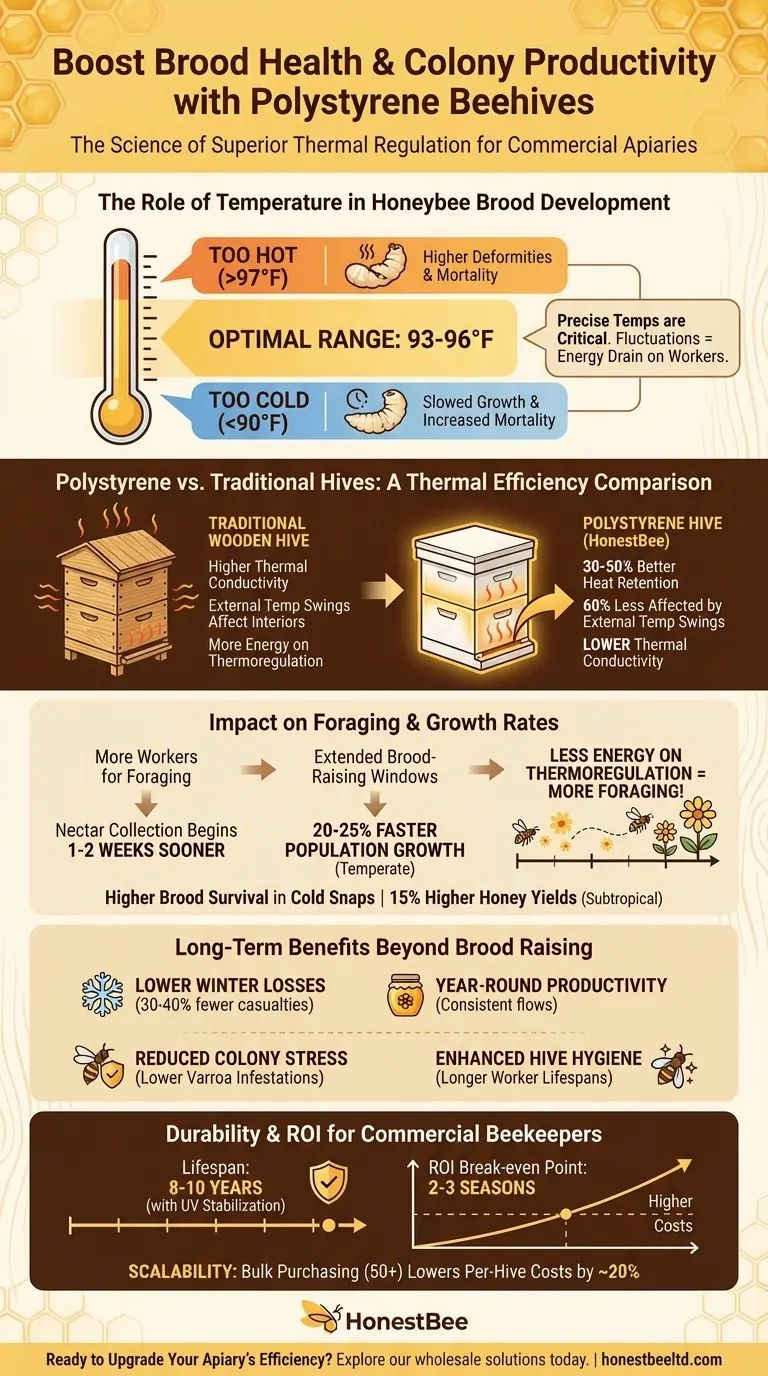
Honeybee larvae require precise temperatures (around 93–96°F) to develop properly. Even minor deviations can delay maturation or increase mortality rates. Worker bees expend significant energy fanning or clustering to maintain this range—energy that could otherwise fuel foraging or hive maintenance.
Critical Temperature Thresholds
Studies indicate:
- Below 90°F: Brood development slows, reducing colony growth rates.
-
Above 97°F: Larvae experience higher deformities and mortality.
Polystyrene’s insulation minimizes these fluctuations, allowing bees to focus on productivity rather than thermoregulation.
Polystyrene vs. Traditional Hives: A Thermal Efficiency Comparison
Heat Retention Metrics
Polystyrene hives retain heat roughly 30–50% more effectively than wooden hives, thanks to:
- Lower thermal conductivity: Polystyrene traps heat, reducing the need for bee-generated warmth.
- Climate resilience: External temperature swings affect hive interiors 60% less in polystyrene models, per field trials.
Impact on Foraging Efficiency
With fewer bees tied to temperature control, colonies allocate more workers to foraging earlier in the season. Case studies show polystyrene-hived colonies:
- Begin nectar collection 1–2 weeks sooner in temperate climates.
- Sustain higher brood survival rates during sudden cold snaps.
Case Studies: Colony Growth Rates in Polystyrene Hives
Temperate vs. Subtropical Performance
- Temperate regions: Polystyrene colonies showed 20–25% faster population growth due to extended brood-raising windows.
- Subtropical zones: Reduced heat stress led to 15% higher honey yields, as bees spent less time ventilating the hive.
Long-Term Colony Stability
By minimizing energy spent on thermoregulation, worker bees exhibit:
- Longer lifespans (reducing replacement needs).
- Enhanced hive hygiene, as more bees can dedicate time to cleaning.
Long-Term Benefits Beyond Brood Raising
Energy Conservation = Higher Output
Stable temperatures mean:
- Lower winter losses: Polystyrene colonies overwinter with 30–40% fewer bee casualties in cold climates.
- Year-round productivity: Commercial apiaries report more consistent honey flows across seasons.
Reduced Colony Stress
Fewer temperature fluctuations correlate with:
- Lower Varroa mite infestations (linked to stress-weakened immunity).
- Reduced swarming impulses, preserving colony cohesion.
Addressing Concerns: Durability and Cost-Effectiveness
Lifespan Under UV Exposure
While polystyrene degrades faster than wood in direct sunlight, modern UV-stabilized models last 8–10 years—comparable to untreated pine. Protective coatings can extend this further.
ROI for Commercial Beekeepers
- Break-even point: Achieved within 2–3 seasons via higher honey yields and reduced colony replacement costs.
- Scalability: Bulk purchasing (e.g., 50+ units) lowers per-hive costs by ~20%, making polystyrene viable for large operations.
Ready to Upgrade Your Apiary’s Efficiency?
HONESTBEE’s polystyrene beehives help commercial beekeepers and distributors achieve healthier colonies and higher yields—without the energy drain of traditional hives. Explore our wholesale solutions today and invest in productivity that pays back season after season.
Guía Visual
Productos relacionados
- Colmenas profesionales de plástico aislante
- Conector de plástico resistente para colmenas de abejas
- Tazas de poliestireno negro transparente para injertos de abejas reina Tazas sin asa para abejas reina
- Marco de plástico para colmenas de apicultura al por mayor
- Colmenas de Abejas de Espuma de Poliestireno Mini Caja de Nuc de Apareamiento con Marcos Alimentador Colmenas de Abejas de Espuma de Poliestireno Caja de Nuc de 3 Marcos
Artículos relacionados
- Colmenas de plástico: Una inversión inteligente para los apicultores modernos
- Cómo optimizar el aislamiento de colmenas: una guía basada en datos para apicultores
- La Guía del Apicultor para el Invierno de las Colmenas: Por Qué la Humedad, No el Frío, es el Enemigo
- Cómo aislar colmenas para la supervivencia invernal: Una guía regional para apicultores
- Cómo aislar la colmena para que las abejas sobrevivan al invierno