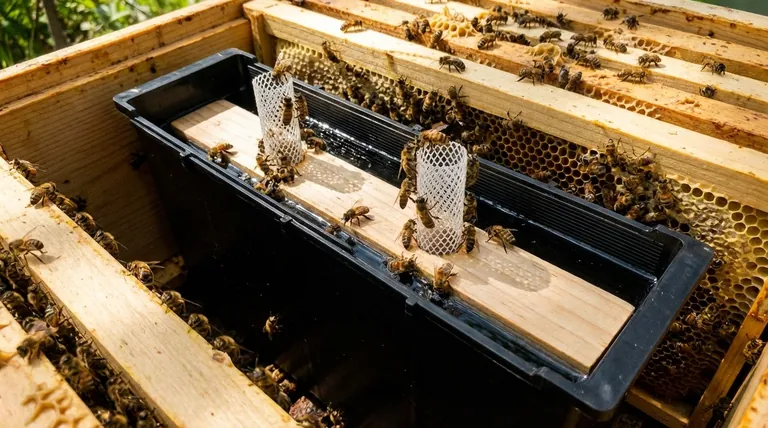
Beekeepers know the frustration of losing worker bees to drowning in sugar syrup feeders. Traditional designs often turn life-sustaining feeding stations into accidental death traps—but research shows mesh ladders can reduce drowning incidents by over 80%. This article breaks down the science behind these simple yet transformative devices and how to implement them effectively.
Feeder Box Risks and Bee Safety Challenges
Why Drowning Occurs in Traditional Designs
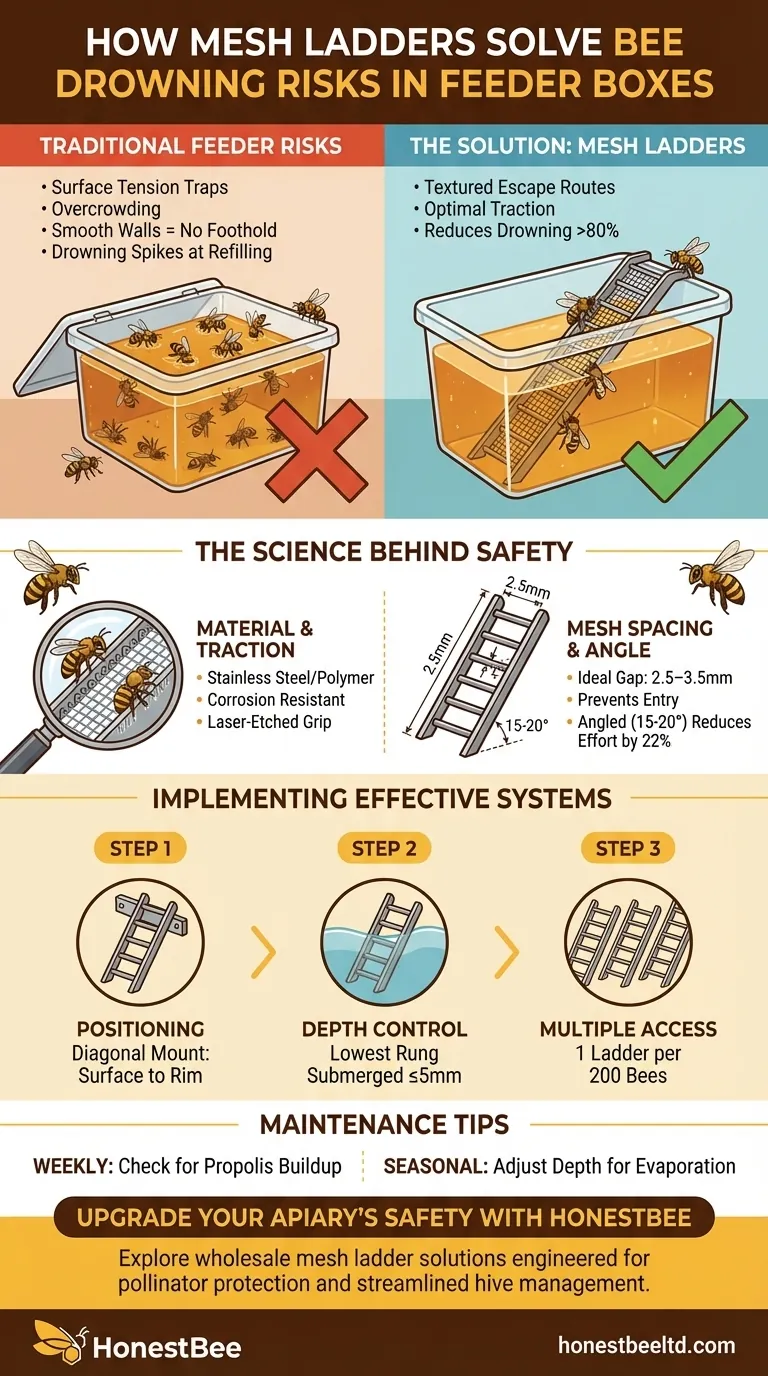
Bees lack the buoyancy to escape liquid surfaces. Smooth plastic or glass feeder walls offer no footholds, causing exhausted foragers to slip below the syrup. Studies of hive behavior reveal:
- Surface tension traps: Syrup’s viscosity prevents bees from breaking free once their wings are wet.
- Overcrowding: Competitive feeding pushes weaker bees into the liquid.
Escaping Behaviors During Refilling
Observations show bees struggle most during feeder replenishment. Sudden liquid level changes:
- Disorient older bees with slower reflexes.
- Force clusters to cling to unsafe edges.
Key Insight: A 2021 field trial found drowning rates spike by 40% immediately after refilling uncovered feeders.
The Science Behind Mesh Ladders and Barriers
Material Selection for Durability and Traction
Mesh ladders work by providing textured escape routes. Optimal materials balance:
- Corrosion resistance: Stainless steel or food-grade polymers withstand hive humidity.
- Grip enhancement: Laser-etched microgrooves outperform smooth metals in bee traction tests.
Mesh Spacing: Balancing Access and Restriction
The ideal gap between ladder rungs (2.5–3.5mm) achieves two goals:
- Allows bees to climb using tarsal claws.
- Prevents younger, smaller bees from entering overcrowded feeders.
Pro Tip: Angled ladders at 15–20° reduce energy expenditure during climbs by 22% compared to vertical designs.
Implementing Effective Feeder Systems
Step-by-Step Installation Best Practices
- Positioning: Mount ladders diagonally from syrup surface to feeder rim—this creates a continuous escape path.
- Depth Control: Keep the lowest rung submerged ≤5mm to minimize initial drowning risk.
- Multiple Access Points: Install 1 ladder per 200 bees to prevent congestion.
Maintenance Tips to Ensure Long-Term Functionality
- Weekly inspections: Check for propolis buildup that can smooth traction surfaces.
- Seasonal adjustments: In summer, extend ladders deeper as evaporation lowers syrup levels.
Upgrade Your Apiary’s Safety
HONESTBEE’s beekeeping supplies help commercial apiaries eliminate preventable losses. Explore our wholesale-focused mesh ladder solutions—engineered to protect pollinators while streamlining hive management.
Final Thought: Sometimes the smallest innovations, like a textured ramp, make the biggest difference in sustaining healthy colonies.
Guía Visual
Productos relacionados
- Colmenas de Abejas de Espuma de Poliestireno Mini Caja de Nuc de Apareamiento con Marcos Alimentador Colmenas de Abejas de Espuma de Poliestireno Caja de Nuc de 3 Marcos
- Alimentador profesional para colmenas HONESTBEE Marco para apicultura
- Tablero de madera HONESTBEE con diseño de malla triangular para la apicultura
Artículos relacionados
- La termodinámica de una nueva colonia: Por qué una caja de nuc más pequeña es un comienzo más fuerte
- Arquitectura de la Realeza: La Caja de Núcleo como Crisol de una Reina
- Cómo los marcos más pequeños mejoran la salud de las crías mediante la regulación térmica
- La Caja de Nuc No Es un Hogar, Es una Herramienta: Una Guía Estratégica para la Gestión de Flotas de Apiarios
- Diseño para el Instinto: Por Qué la Caja Nuc es la Trampa de Enjambres Perfecta