Beekeepers constantly seek ways to optimize hive conditions for healthier colonies and higher honey yields. Expanded Polystyrene (EPS) hives have emerged as a scientifically validated solution, offering unmatched thermal regulation that directly translates to measurable productivity gains. This article examines the insulation science behind EPS hives, compares their advantages to traditional materials, shares real-world success cases, and provides actionable implementation strategies.
The Science of Hive Insulation
Thermal Regulation in Bee Colonies
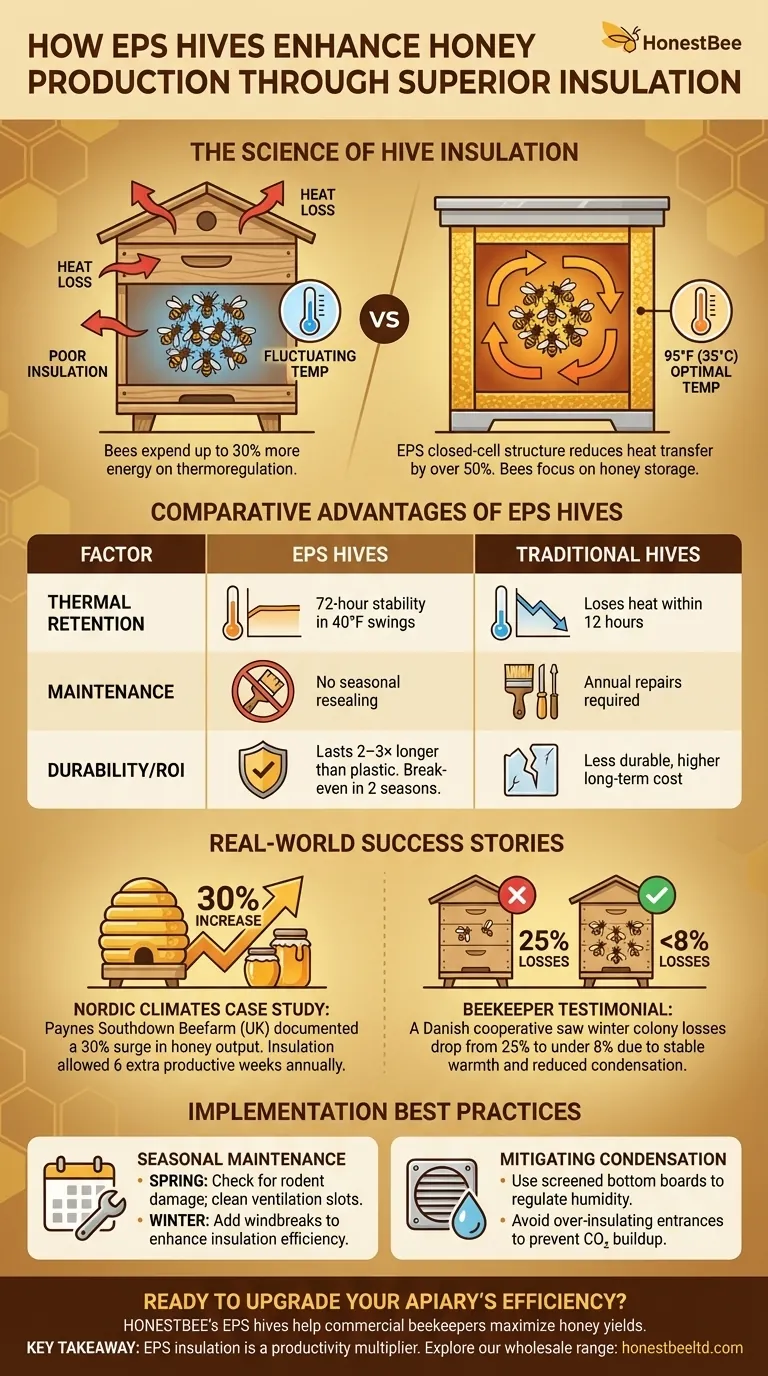
Bees maintain a precise internal hive temperature of around 95°F (35°C) for brood rearing and honey curing. Research shows that poor insulation forces colonies to expend up to 30% more energy on thermoregulation—energy that could otherwise fuel honey production. EPS hives excel here, with their closed-cell structure reducing heat transfer by over 50% compared to uninsulated wood.
Key Benefits:
- Stable temperatures minimize brood mortality.
- Bees allocate more resources to honey storage versus temperature control.
Energy Conservation and Honey Preservation
EPS insulation prevents drastic temperature fluctuations that cause honey to crystallize or ferment. Case studies indicate hives with consistent internal conditions produce honey with lower moisture content (under 18%), extending shelf life and meeting premium market standards.
Comparative Advantages of EPS Hives
EPS vs. Wood: Temperature Stability Analysis
While wood hives absorb moisture and warp, EPS maintains structural integrity across climates:
| Factor | EPS Hives | Traditional Wood Hives |
|---|---|---|
| Thermal Retention | 72-hour stability in 40°F swings | Loses heat within 12 hours |
| Maintenance | No seasonal resealing | Annual repairs required |
Cost-Benefit Over Plastic Hives
Though plastic hives are cheaper upfront, EPS offers long-term savings:
- Durability: Lasts 2–3× longer than plastic in UV-exposed environments.
- ROI: Commercial apiaries report breaking even within 2 seasons via increased yields.
Real-World Success Stories
Case Study: 30% Honey Yield Increase in Nordic Climates
Paynes Southdown Beefarm (UK) documented a 30% surge in honey output after switching to EPS hives. The insulation allowed bees to forage earlier in spring and later into autumn, adding 6 productive weeks annually.
Beekeeper Testimonial: Winter Survival Rates
A Danish cooperative saw winter colony losses drop from 25% to under 8% with EPS hives, attributing this to reduced condensation and stable warmth.
Implementation Best Practices
Seasonal Maintenance for EPS Hives
- Spring: Check for rodent damage; clean ventilation slots.
- Winter: Add windbreaks to enhance insulation efficiency.
Mitigating Condensation Risks
EPS’s vapor barrier properties minimize condensation, but proper ventilation remains critical:
- Use screened bottom boards to regulate humidity.
- Avoid over-insulating entrances to prevent CO₂ buildup.
Ready to Upgrade Your Apiary’s Efficiency?
HONESTBEE’s EPS hives help commercial beekeepers and distributors maximize honey yields while reducing colony stress. Explore our wholesale-focused range to invest in hives backed by science and real-world results.
Key Takeaway: EPS insulation isn’t just about warmth—it’s a productivity multiplier that lets bees focus on what they do best: making exceptional honey.
Guía Visual
Productos relacionados
- Limpiador de precisión de acero inoxidable para ranuras y esquinas de colmenas
- Herramienta ergonómica para separar marcos de plástico para una gestión rápida de la colmena Apicultura
- Colmena redonda de acero inoxidable para ventilación
- Ahumador eléctrico de abejas Ahumador de colmenas estilo europeo para apicultura
- Juego profesional de números de colmena de gran formato para apicultura
Artículos relacionados
- Más allá del raspado: por qué su estrategia de limpieza de cuadros de colmena le está costando dinero
- Cómo proteger sus colmenas: Gestión del marco después de la cosecha para apicultores
- La tiranía del espacio: Cómo un simple cuadro redefinió la apicultura
- Cómo Transicionar Marcos de Colmena de Forma Segura Sin Interrumpir la Salud de la Colonia
- Palanca y Precisión: La Física Oculta de una Herramienta Simple para Colmenas